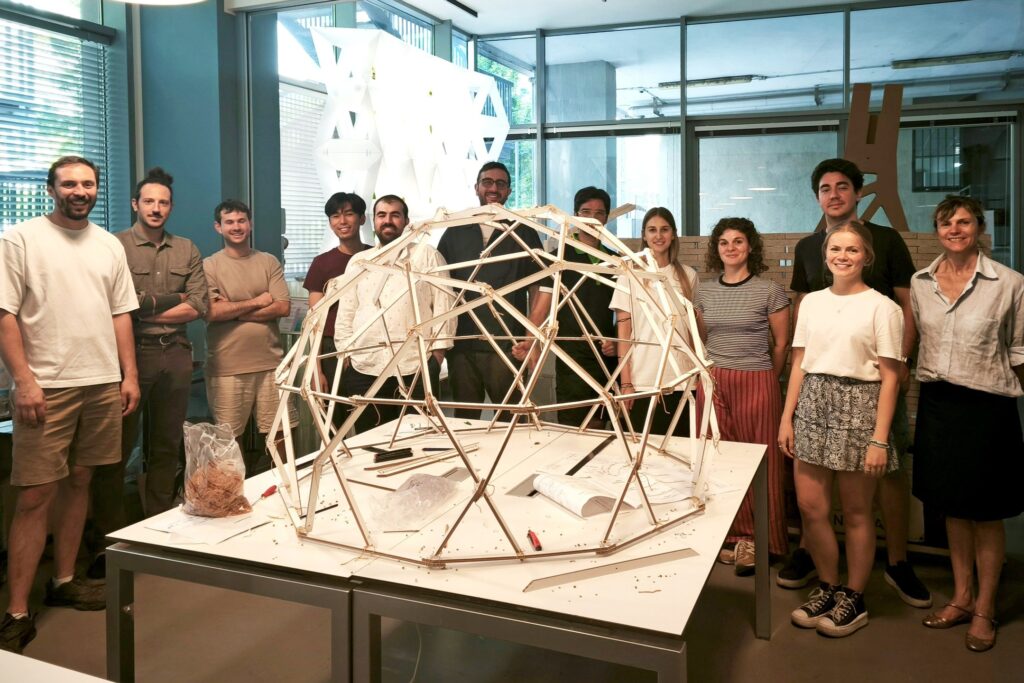
Space, technology, and nature converge in parametric design to shape new living environments. From July 12 to 15, 2025, the workshop series for the Material Balance Design Master’s program concluded at the DABC Department of the Politecnico di Milano. We experienced four days of intense research, during which computational design and Artificial Intelligence became concrete tools for exploring the boundary between the digital and the physical. Starting from a shared vision, the group of students transformed abstract concepts into tangible prototypes, marking a key milestone in this academic journey.
This in-depth exploration of the project was guided by the expertise of our R&D team. Jacopo Cardinali and Alessandro Buffi guided the participants through an analysis of the technical constraints and requirements necessary for the development of temporary, dismantlable installations. The transition from theory to practice allowed for the introduction of advanced design methodologies, preparing the students for the next phase: selecting and working with materials to create structural components and cardboard installations.
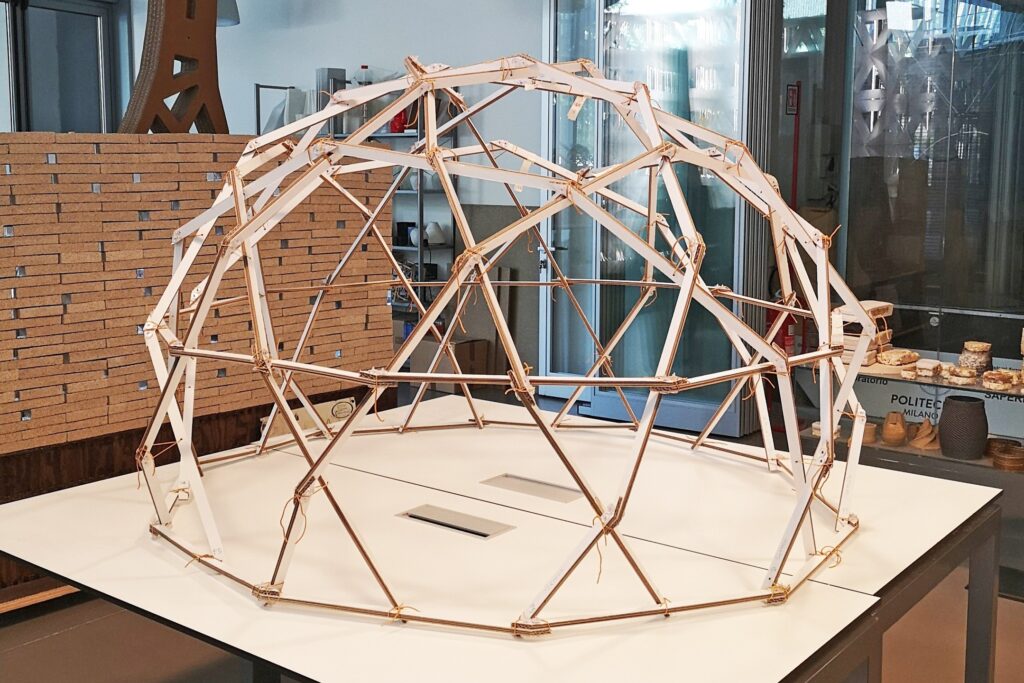
Experimentation with materials was the beating heart of the workshop. The students designed hybrid structures by integrating natural materials such as wood and textiles with state-of-the-art PLA filaments. From data analysis to prototyping, each component is designed to highlight the raw materials and maximize aesthetic appeal, ultimately defining a new language of “organic beauty.”
Alongside research on materials, the focus shifted to computational tools and form optimization. The sessions explored the use of generative AI for concept development and computational analysis, fundamental steps for managing the complexity of new architectural models. This phase of data analysis provided the essential technical foundation for tackling the final construction challenge: the reinterpretation of a classic of architectural ingenuity through innovative modular systems.
The highlight of the workshop was the digital and physical reconstruction of Buckminster Fuller’s geodesic dome. Starting with simple 2D drawings, the students developed complex assembly systems and eventually created a full-scale cardboard mock-up.
The creation of the mock-up was not merely a technical exercise, but rather the expression of a deep synergy between our production lab and academic research. This ongoing exchange allows us to test new methodologies in a cutting-edge context, where technology meets respect for the environment, and where dialogue with students and researchers fuels our vision of a hands-on industry, paving the way for a necessary reflection on how we will inhabit the exhibition spaces and places of the future.
We would like to thank #MasterMaBa and Prof. Ingrid Maria Paoletti for welcoming us to this inspiring experimental workshop. Each workshop is a story we write together, with passion and a vision for the future.
materieunite, design your habitat.