The European Forum on Circular Materials and Temporary Architecture, held on June 12 at the materieunite headquarters at the Sviluppumbria incubator in Terni, concluded by leaving a tangible impact on the local area and the project’s community. The event, organized with the support of Ferrocart as an official satellite event of the New European Bauhaus Festival 2026, demonstrated that circularity is not an abstract concept or a mere theoretical principle, but rather an approach to be cultivated collectively, integrating sustainability as a genuine management and process strategy.
The world of contemporary design is increasingly examining the transience of structures and the life cycle of materials. Against this backdrop, the event fostered a vibrant, transdisciplinary ecosystem, bringing together architects, creatives, designers, educators, students, and industry representatives to address the urgent need to explore new forms of temporary and sustainable design.
Strategic Visions, Systems, and Metaproject
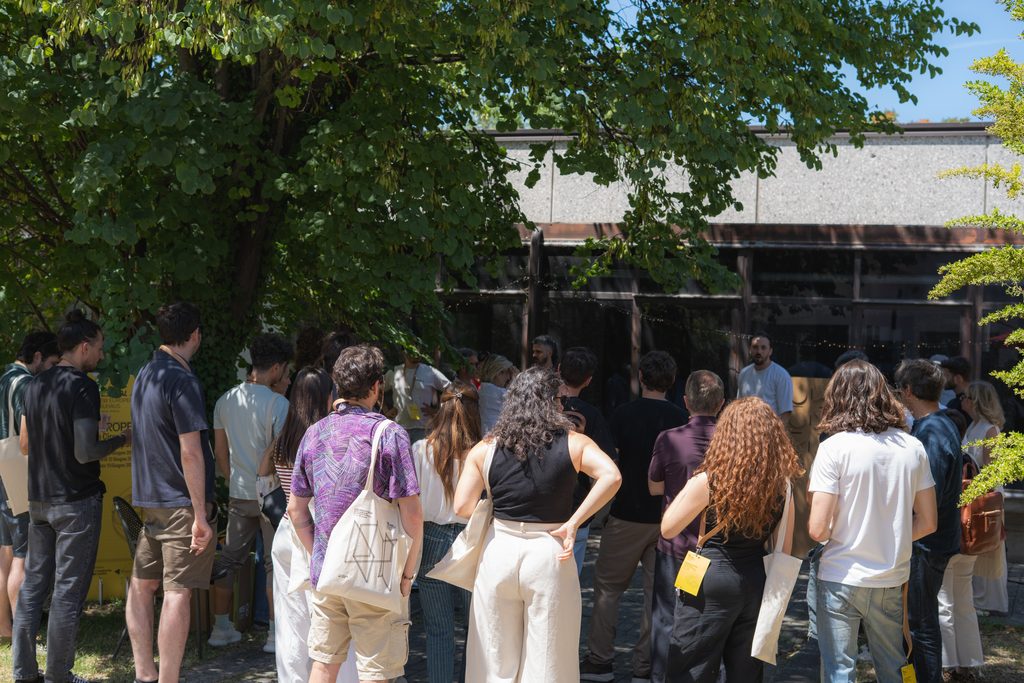
The morning session served to outline the conceptual framework of this journey, shifting the focus from the aesthetics of the final object to the complexity of relational and material systems through the keynote The System as a Project by Jacopo Cardinali, CEO of materieunite, and the Lectio Magistralis Designing the Project by Massimo Ciafrei, professor of Basic Design and Theory of Form at ISIA Roma Design.
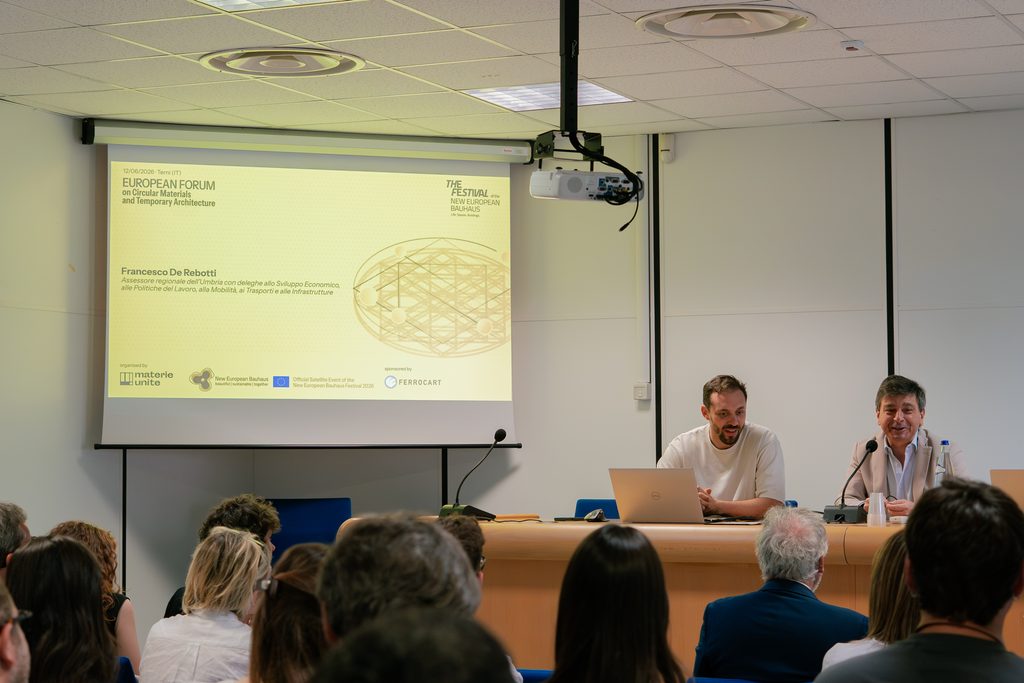
The System as a Project – Jacopo Cardinali
The opening session, kicked off by a welcome address from Councilor Tommaso De Rebotti, emphasized the importance of dialogue between research and industry. This was followed by the keynote address, “The System as a Project,” which highlighted how sustainability serves as an integrated management tool. Starting with the challenges and waste typical of traditional trade show setups, the presentation illustrated the potential of modularity, carbon footprint measurement, and innovative digital tools such as the Agave project.
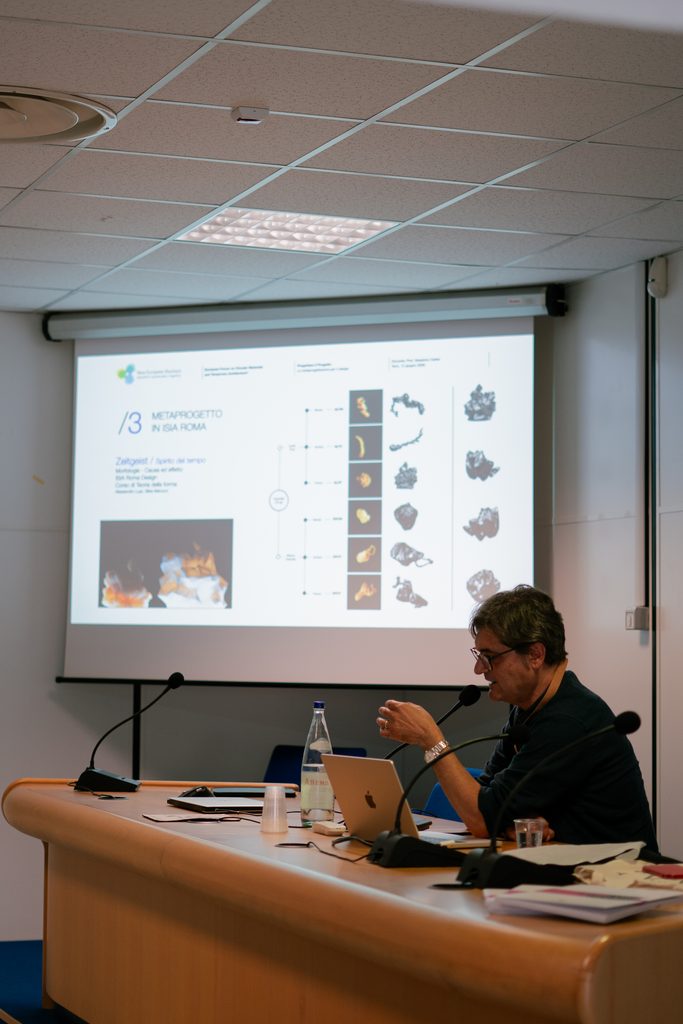
Designing the Project – Massimo Ciafrei
The theoretical highlight of the morning was Prof. Massimo Ciafrei’s presentation, Designing the Project. Far removed from the rigid conventions of a traditional academic lecture, the Lectio Magistralis offered a rich methodological exploration, linking the legacy of the Bauhaus and the Ulm School to contemporary educational practices. Ciafrei focused on the deep grammar of the project and the metaproject: the latter defined not merely as a preliminary phase, but as a universal methodological tool, indispensable for interpreting, decoding, and managing the complex variables of contemporary and anthropogenic systems.
Hands-On Experiments and Material Atlases
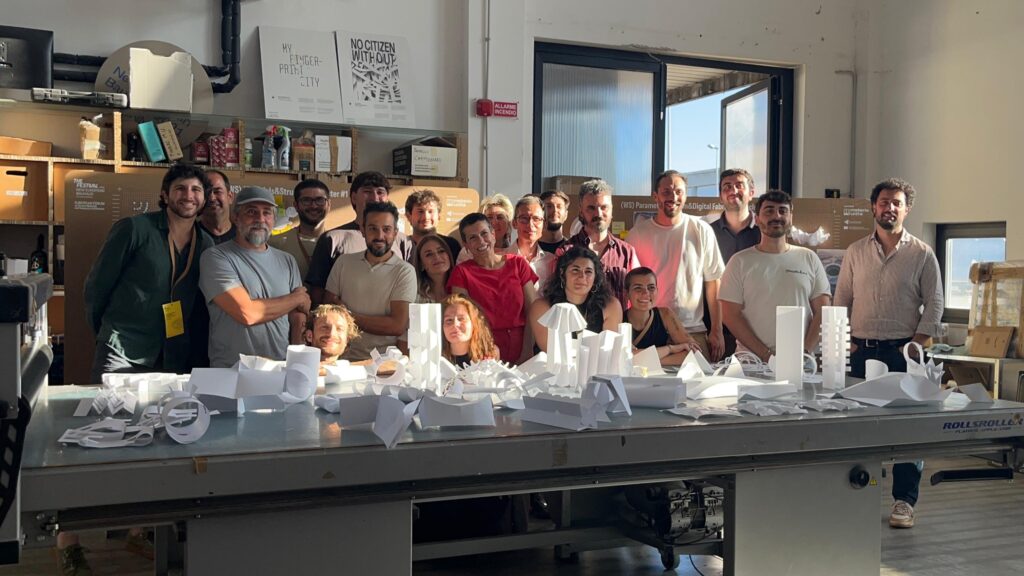
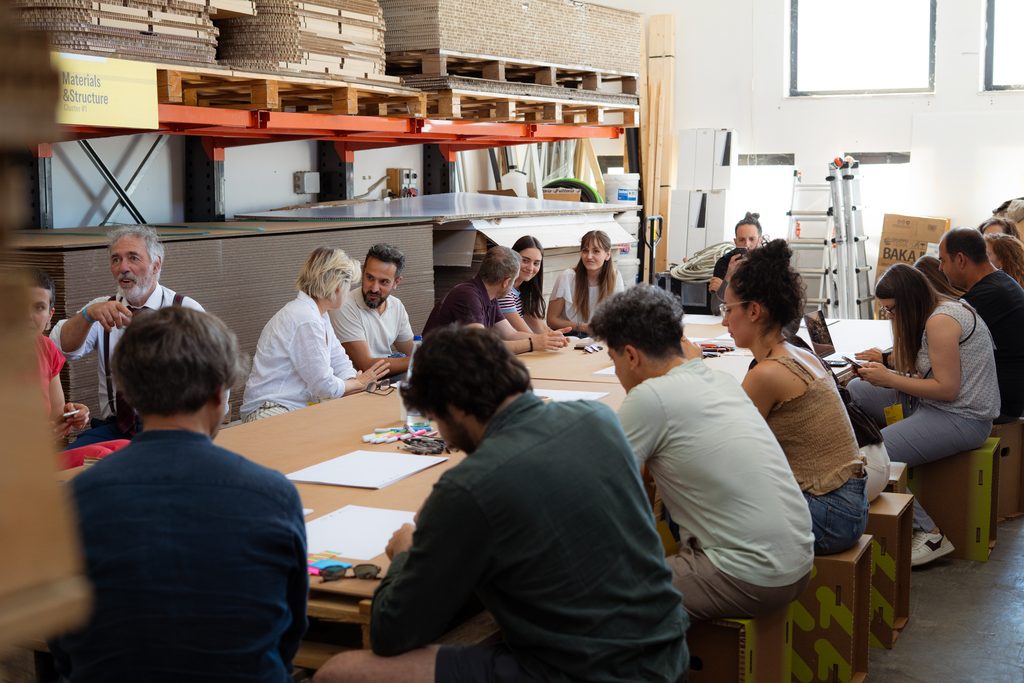
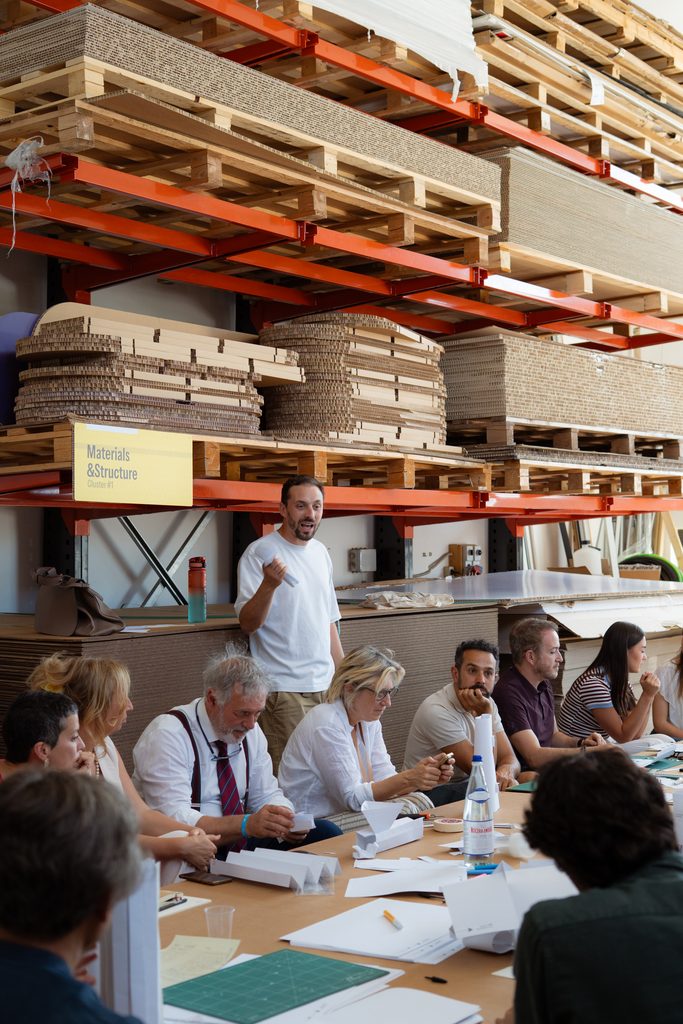
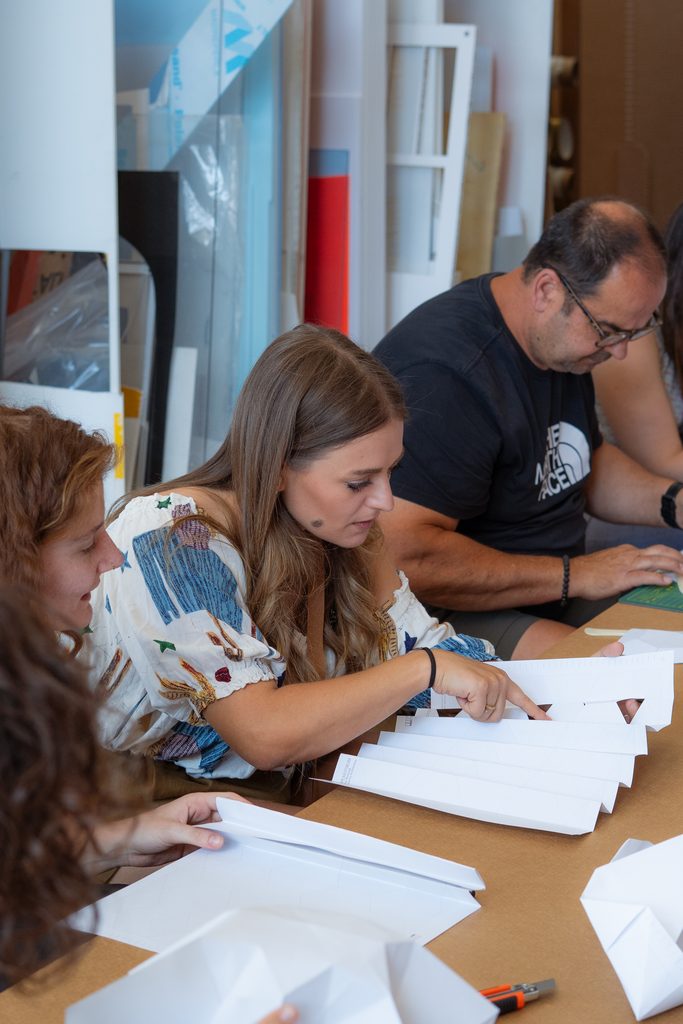
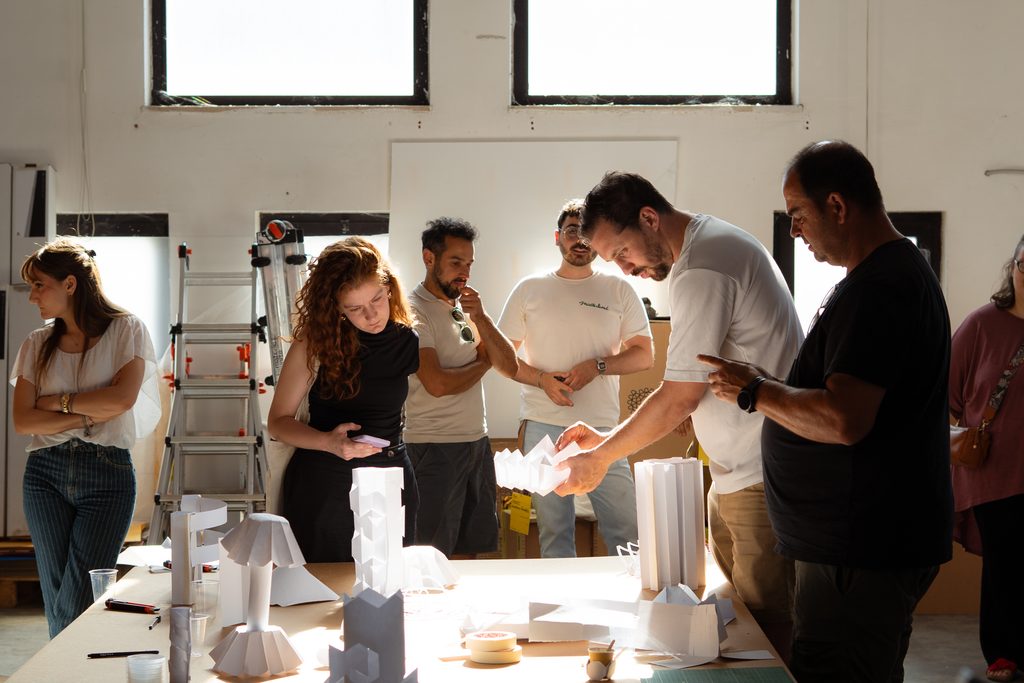
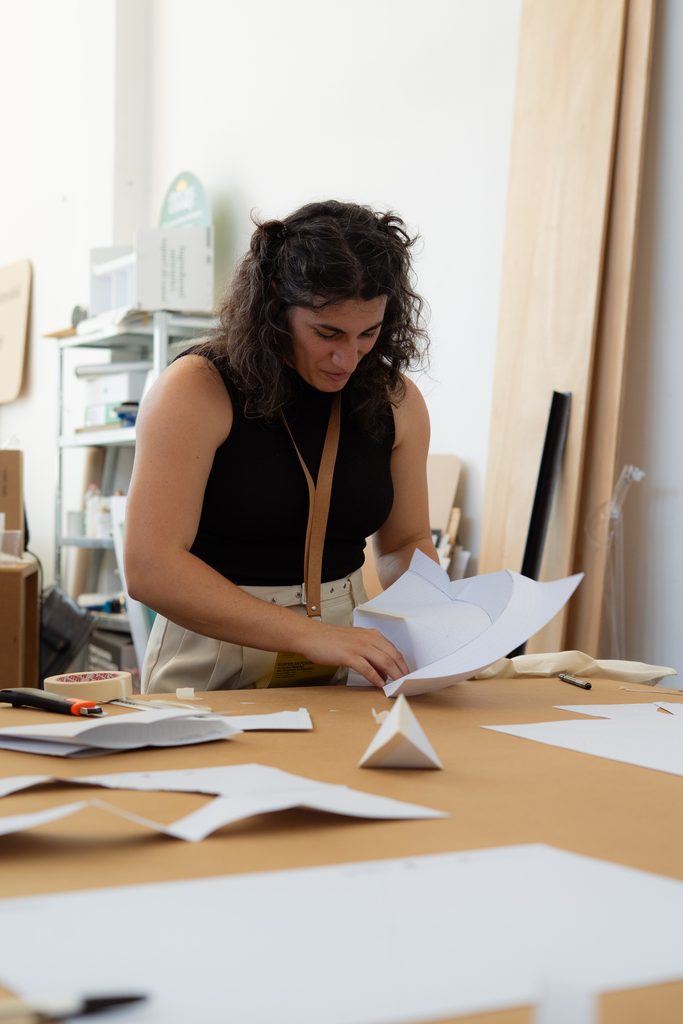
In the afternoon, theoretical reflection gave way to “doing.” The preparatory approach of Basic Design was translated into two technical-practical workshops led by the designers and planners from materieunite, who transformed the space into a hands-on, cognitive laboratory focused on the use of paper and lightweight materials:
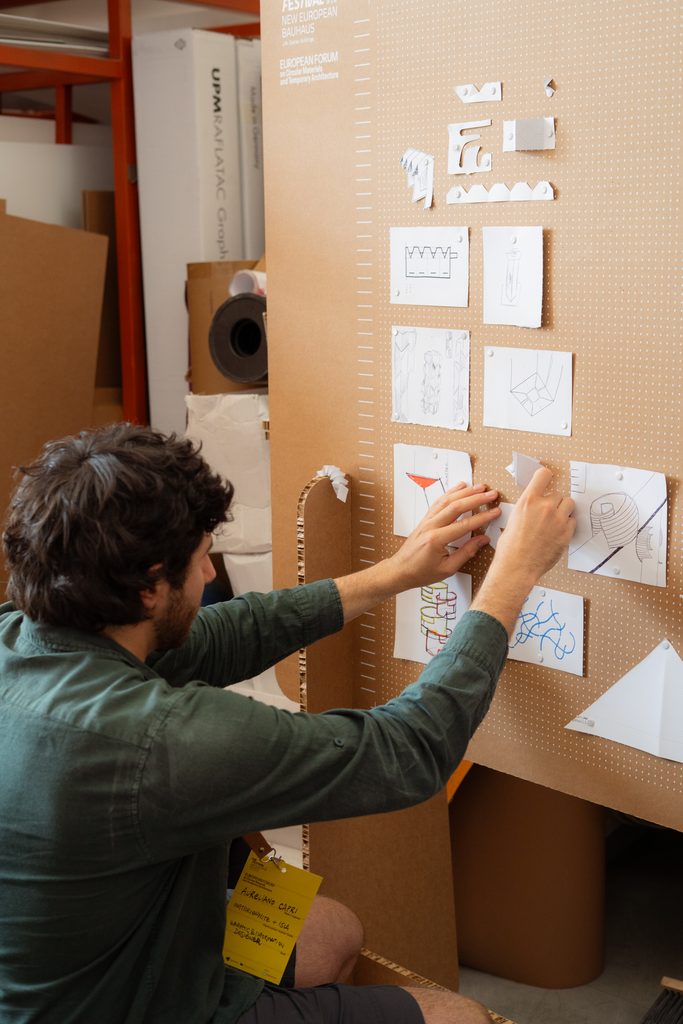
- Materials & Structures: The first group conducted a geometric-mechanical investigation of paper, pushing the material beyond its limits through basic cutting and folding techniques to analyze its structural response and strength. The resulting reactions were cataloged in an Atlas of Behaviors.
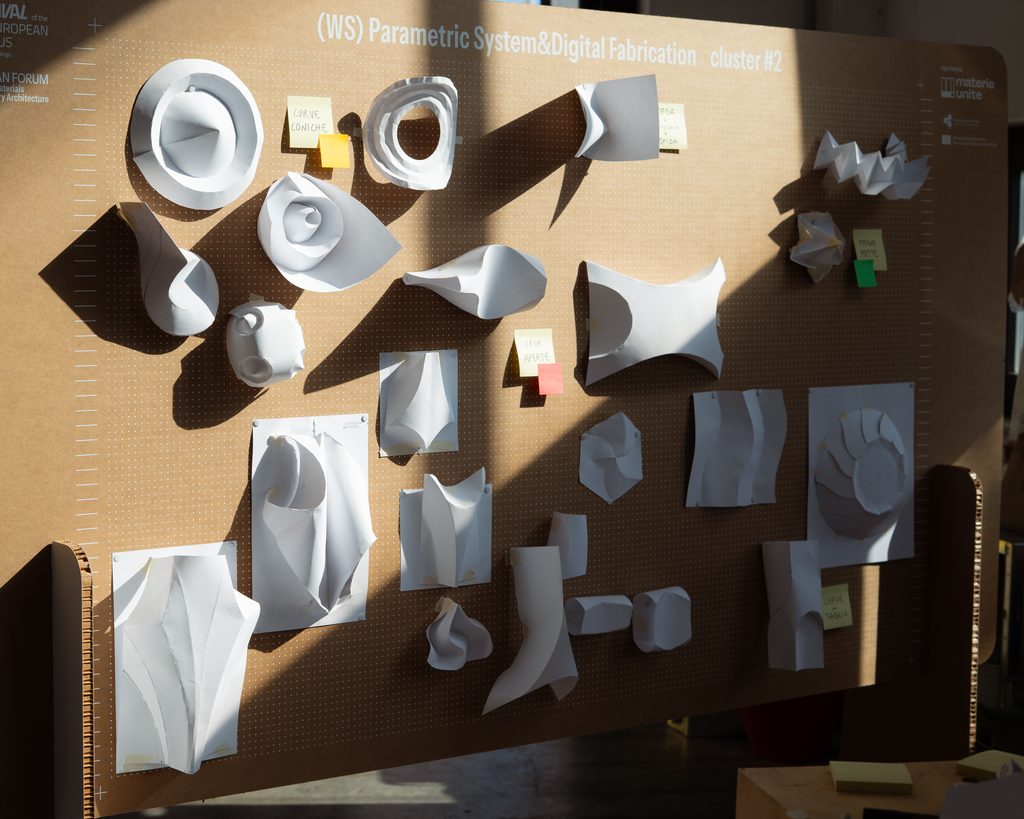
- Parametric Architecture & Digital Fabrication: The second cluster explored the boundaries of algorithmic modeling, translating elementary parametric logics into tangible forms, curved folds, and complex morphologies. The continuous flow between parameters and production was synthesized in an Atlas of Transformations.
By temporarily setting aside the mediation of screens in favor of direct manipulation, the participants formalized the knowledge they generated through two collective summary boards. These transdisciplinary summary boards mapped the work carried out by integrating conceptual sketches, scaled volumetric models, paper samples, semantic keywords, photographs, and visual reference elements.
Connection to and Rediscovery of the Local Area
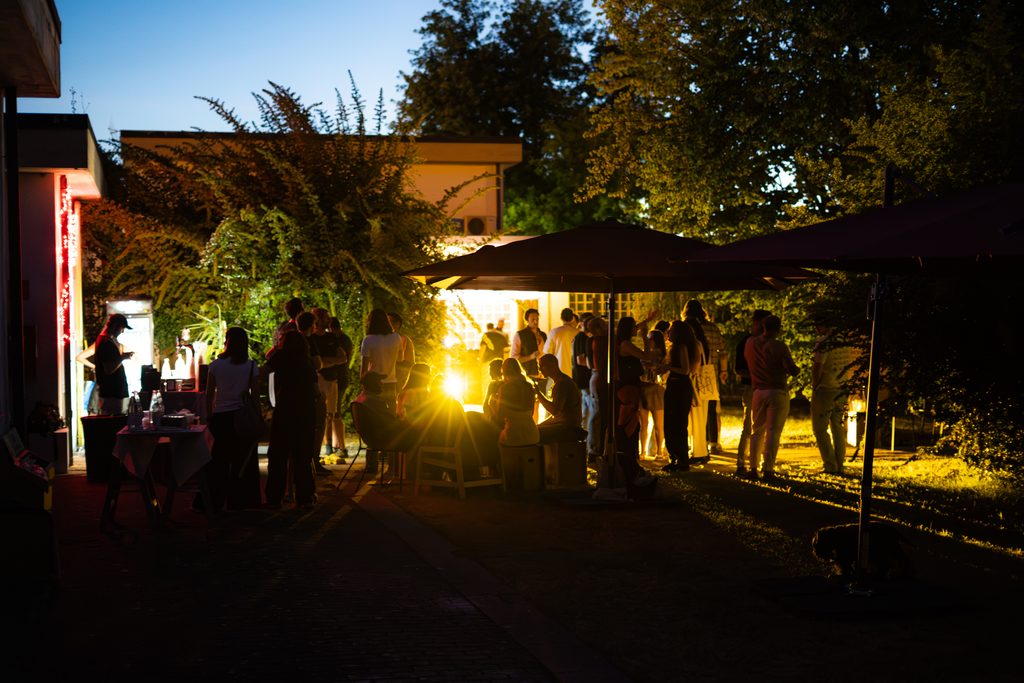
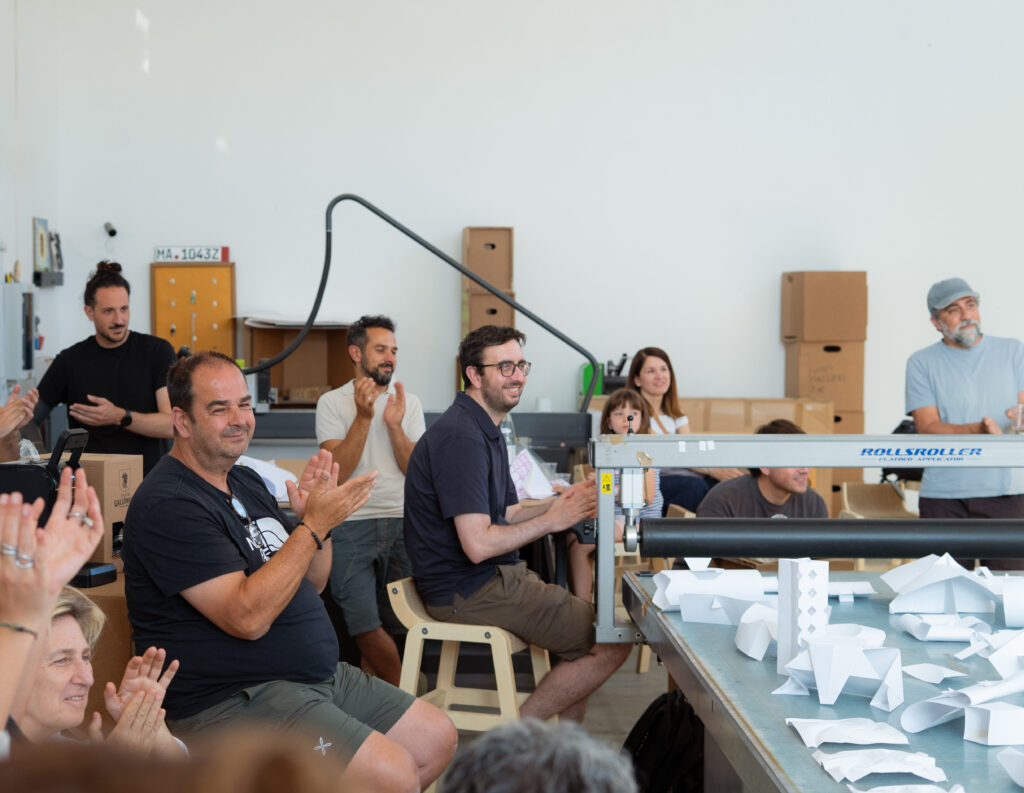
The experience wasn’t limited to the workshop sessions. The social gatherings and informal breaks between sessions proved to be true incubators for relationships, capable of sparking unexpected connections, both professional and personal. This atmosphere of exchange continued into the evening, enlivened by a performance from the Terni-based collective LETZ.
The Forum’s impact extended beyond the company’s boundaries. The following day, the group explored the area, led by two exceptional experts:
- Dr. Riccardo Mattea (zoologist and nature guide) led the participants on a tour to discover the botanical and faunal heritage of the Marmore Falls.
- Architect Alessandro Capati led the tour of HYDRA – The Water Museum, exploring the historical connection between water management, energy supply, and the industrial development of the city of Terni.
The European Forum on Circular Materials and Temporary Architecture concludes with the realization that sustainability also lies in the ability to build networks. materieunite thus confirmed the strategic value of lightweight materials, providing participants with an open practical and theoretical space in which to explore new questions and chart the future paths of temporary architecture.
materieunite, design your habitat.